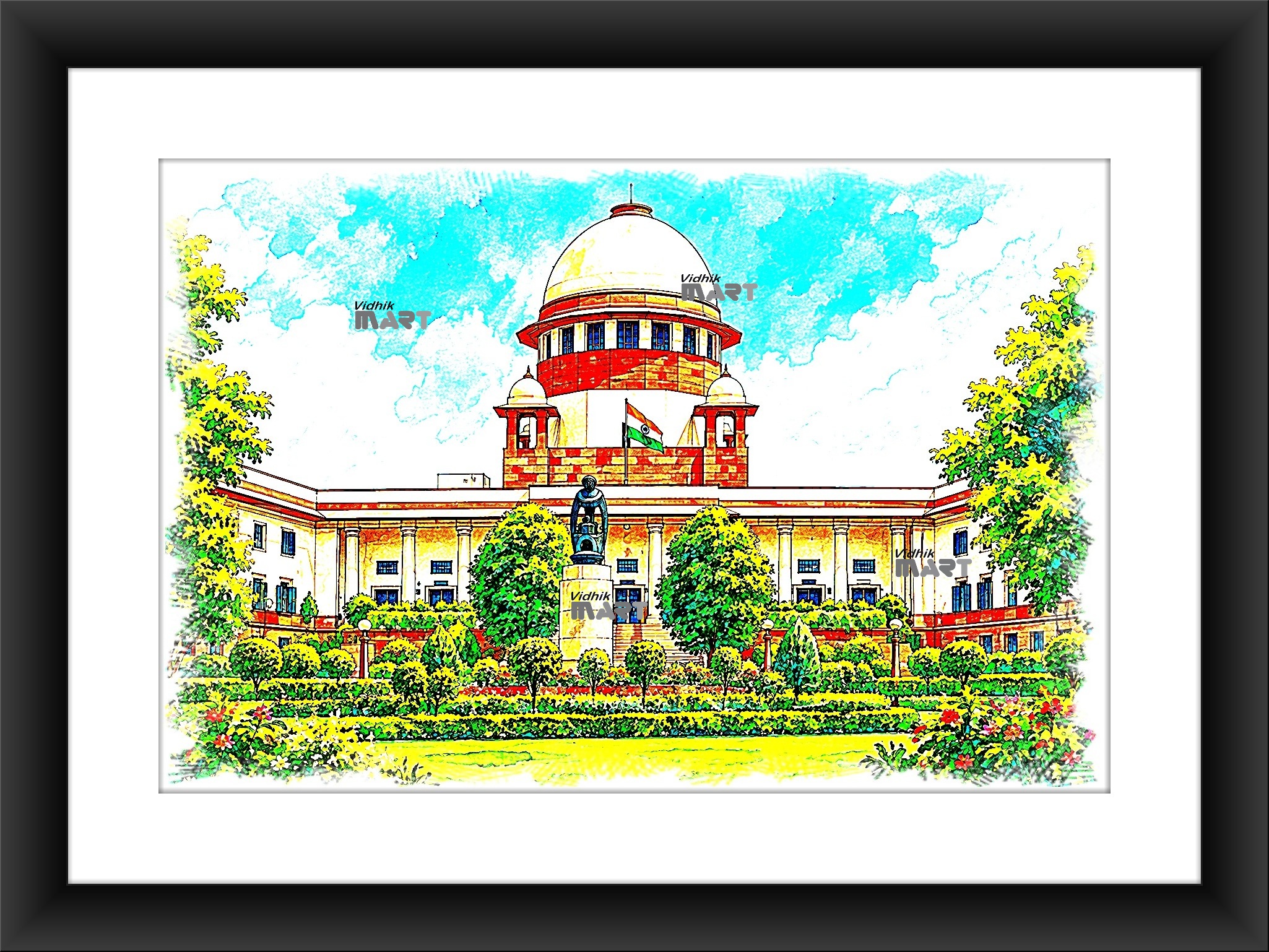
The Supreme Court of India is the supreme judicial authority and the highest court in India. It is the highest appellate court for all civil and criminal cases in India. The court is led by the Chief Justice of India and has a maximum sanctioned strength of 37 judges excluding the chief justice. It was established on 28 January 1950, two days after India became a republic, and replaced the Judicial Committee of the Privy Council as the highest court of appeal. It has operated from the Supreme Court building in New Delhi since 1958. With expansive authority to initiate actions and wield appellate jurisdiction over all courts and the ability to invalidate amendments to the constitution, the Supreme Court of India is widely acknowledged as one of the most powerful supreme courts in the world.
1. History & Establishment Predecessor: Succeeded the Federal Court of India (established under the Government of India Act, 1935) and inherited appellate functions from the Judicial Committee of the Privy Council. Inauguration: Founded on January 26, 1950, and officially inaugurated on January 28, 1950. First Chief Justice: Sir Harilal Jekisundas (H.J.) Kania served as the first Chief Justice of India (CJI).
2. Composition & QualificationsStrength: Comprises the Chief Justice of India and up to 33 other judges (maximum sanctioned strength of 34 judges) appointed by the President of India. Tenure: Judges hold office until they attain the age of 65 years. Eligibility (Article 124): Must be a citizen of India and have served as:A High Court judge for at least 5 years, orAn advocate of a High Court for at least 10 years, orA distinguished jurist in the opinion of the President.
3. Constitutional Framework & JurisdictionsGoverned under Part V, Chapter IV (Articles 124–147) of the Constitution: Jurisdiction TypeScope & FunctionsOriginal Jurisdiction (Article 131)Direct jurisdiction over inter-governmental disputes (Union vs. State or State vs. State).Writ Jurisdiction (Article 32)Safeguards Fundamental Rights by issuing writs (Habeas Corpus, Mandamus, Prohibition, Quo Warranto, Certiorari).Appellate Jurisdiction (Articles 132–134)Hears civil, criminal, and constitutional appeals against judgments of the High Courts.Advisory Jurisdiction (Article 143)The President of India can refer matters of public importance or law for advisory opinions.Review Jurisdiction (Article 137)Has the power to review any of its own judgments or orders.Plenary Powers (Article 142)Empowers the court to pass any decree/order necessary for doing "complete justice" in any cause or matter.
4. Key Powers & PrinciplesCourt of Record (Article 129): Holds the power to punish for contempt of itself, and its records have evidentiary value across all subordinate courts.Judicial Review: Can declare ordinary laws or constitutional amendments void if they violate the Constitution or alter its Basic Structure. Binding Precedent (Article 141): The law declared by the Supreme Court is binding on all courts within the territory of India.
5. Landmark Verdicts
Kesavananda Bharati v. State of Kerala (1973): Established the Basic Structure Doctrine, limiting Parliament’s power to amend essential features of the Constitution.
Maneka Gandhi v. Union of India (1978): Expanded Article 21 (Right to Life) to mandate that state action affecting personal liberty must be fair, just, and reasonable.
Justice K.S. Puttaswamy v. Union of India (2017): Declared the Right to Privacy a fundamental right under Article 21.
Shreya Singhal v. Union of India (2015): Struck down Section 66A of the IT Act to uphold online freedom of speech.
Delivery & returns
We deliver products only in India. For full details of the delivery options we offer, please view our Delivery information
We hope you’ll love every purchase, but if you ever need to return an item you can do so within a month of receipt. For full details of how to make a return, please view our Returns information
Similar Products